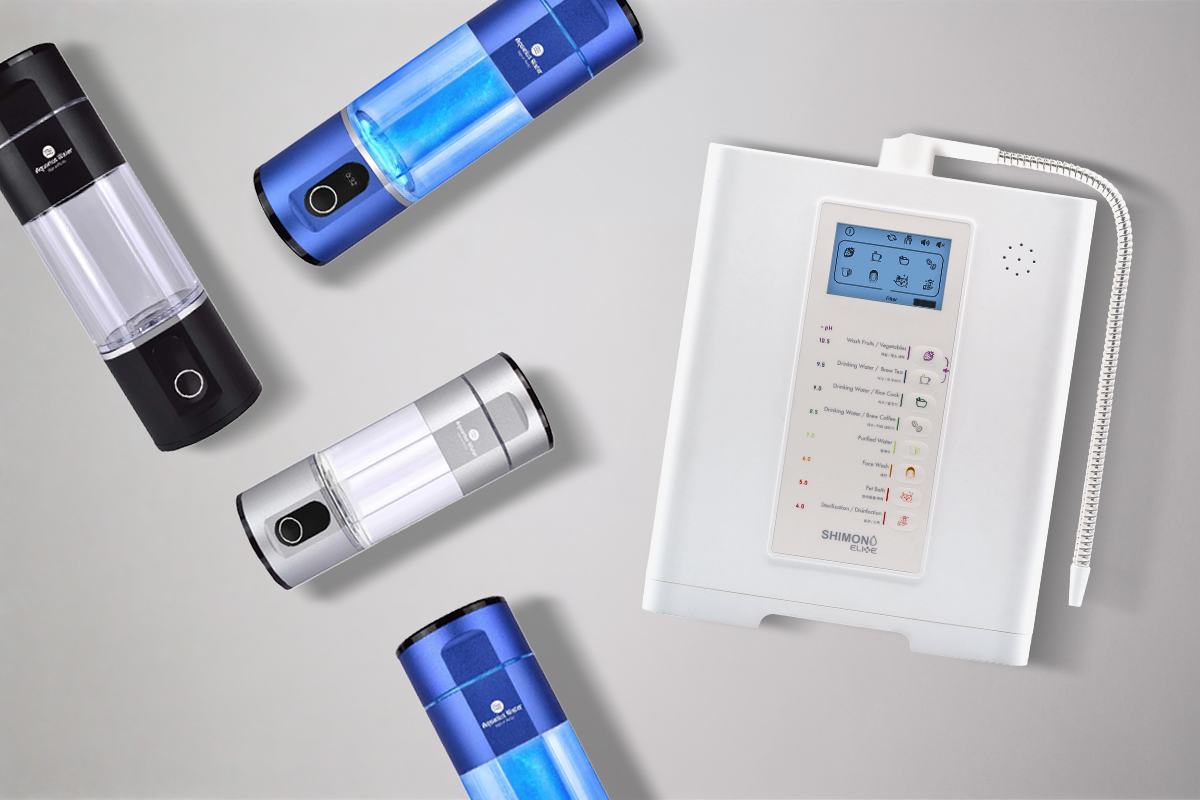
Portable Hydrogen Water Bottles vs Shimono Mizu V1 — The Truth They're Not Telling You
They look sleek. They’re portable. They’re affordable. And social media loves them.
Portable hydrogen water bottles have become a popular wellness gadget in Malaysia — the kind of product that gets gifted, unboxed on TikTok, and stacked on desks next to MacBooks. But there’s a significant gap between what these products promise and what they actually deliver.
Here’s an honest, detailed breakdown — so you can make an informed decision.
How Do Portable Hydrogen Bottles Actually Work?
There are two main types of portable hydrogen water generators on the market, and understanding the difference is critical.
Type 1 — Chemical Generation (Magnesium Tablets/Sticks): The most common and cheapest category. These bottles contain magnesium sticks, ceramic balls, or dissolvable tablets. When magnesium contacts water, it produces a chemical reaction that releases hydrogen gas. Simple, no electricity needed, and very low cost to manufacture.
Type 2 — Electrolysis-Based (SPE/PEM): Higher-end portable bottles use a small electrolysis cell (SPE — Solid Polymer Electrolyte / PEM — Proton Exchange Membrane) powered by a USB-rechargeable battery. They electrically split water to generate H₂, similar in principle to the Mizu V1.
The key word is “similar in principle” — because the execution is where everything diverges.
“A portable hydrogen bottle and the Mizu V1 are not the same product in different sizes. They operate in entirely different performance tiers.”
The Problem with Chemical-Based Hydrogen Bottles
Chemical hydrogen generation through magnesium tablets or sticks sounds convenient — but it comes with serious limitations that are almost never disclosed upfront.
- Uncontrolled reaction: The chemical reaction between magnesium and water is not precise. H₂ output fluctuates based on magnesium quality, water temperature, mineral content, and how worn the tablet is.
- Contamination risk: Cheap magnesium sources can introduce impurities into the water. Some low-grade magnesium sticks contain trace heavy metals. You are literally dissolving a chemical compound into the water you drink.
- No pH adjustment: Chemical reaction bottles do not ionise water. They do not produce negative ORP. They do not create alkalized water. They simply add dissolved hydrogen to water — without the full ionisation profile.
- Inconsistent and declining output: As the magnesium depletes, H₂ production drops — often without the user realising. After a few weeks of use, you may be drinking essentially plain water from a bottle that looks like a wellness product.
- No filtration: The water you put in is the water that comes out — with whatever was in it to begin with. Tap water, bottled water, filtered water — whatever you fill it with, the chemical bottle does nothing to improve its purity.
The Problem with Electrolysis-Based Portable Bottles
SPE/PEM portable bottles are a step up from chemical models — but they still face fundamental limitations compared to a countertop ioniser like the Mizu V1.
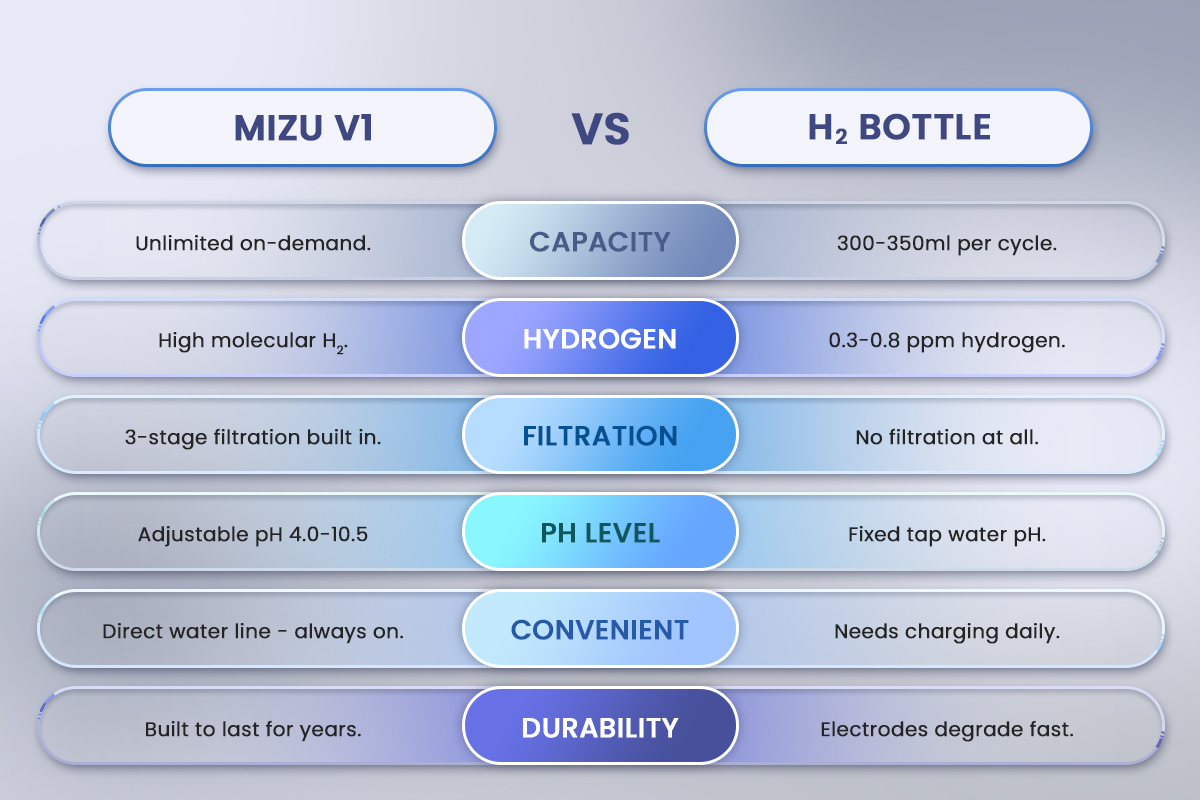
- Volume limitation: Most produce 300–500ml per cycle, taking 3–10 minutes to generate one serving. For a family, this is impractical as a primary water source.
- Battery dependency: Requires regular charging. Forget to charge, no hydrogen water.
- No pre-filtration: The water quality going in determines the water quality coming out. No multi-stage filtration occurs.
- Limited electrode lifespan: The small cells in portable bottles degrade faster than industrial-grade plates in countertop units, with performance declining significantly after 6–12 months of regular use.
- H₂ concentration ceiling: The small cell size physically limits how much hydrogen can be dissolved. Even premium portable bottles typically produce 800–1,200 ppb H₂. The Mizu V1 produces significantly higher concentrations from a full-size ionisation chamber.
- No pH control: Portable electrolysis bottles do raise pH slightly, but they do not offer adjustable pH from 4.0 to 10.5 for multi-purpose household use.
How the Shimono Mizu V1 Compares
Who Are Portable Bottles For?
To be fair — portable hydrogen bottles have a place. They’re useful for travel, office use, or as a supplement when you’re away from home. A quality SPE/PEM bottle from a reputable brand can deliver a meaningful H₂ top-up on the go.
But they are not — and were never designed to be — a primary home water solution. They cannot filter. They cannot ionise at full performance. They cannot serve multiple pH needs. And they cannot produce enough volume for a family’s daily consumption.
The Real Question: What Is Your Water Investment Actually Doing?
A portable hydrogen bottle costs RM50 to RM500. It seems like an accessible entry into the hydrogen water lifestyle. But the reality is: if it’s chemical-based, you may be drinking contaminated water with inconsistent hydrogen. If it’s electrolysis-based, you’re getting a fraction of what a countertop ioniser delivers.
The Shimono Elite Mizu V1 at RM183/month via easy payment is not just a “bigger version” of a portable bottle. It’s a different class of product entirely — one that filters, ionises, and transforms your water at a level no portable device can match.
Don’t let aesthetics substitute for performance. Your family drinks water every day. Make sure what they’re drinking has actually been transformed — not just marketed as if it has.